
An operations business that happens to serve events.
Encore is a logistics, fleet, and inventory business with fifteen years of documented systems, built in Shreveport and designed to be run by operators anywhere.
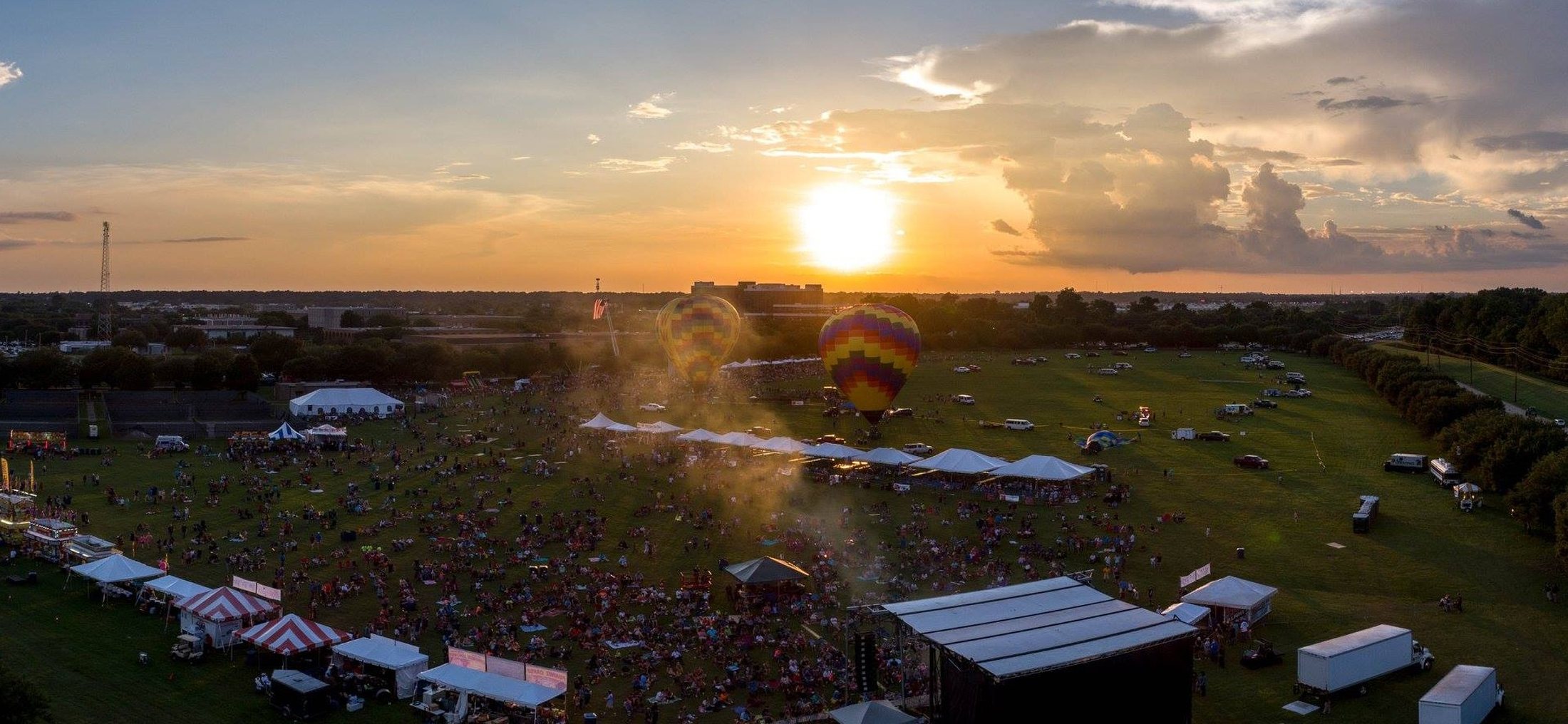
Revenue from assets that earn for years.
An Encore location generates revenue five ways from every event: equipment rental, delivery, installation labor, equipment protection, and consumables. The core assets (tents, tables, chairs) rent out week after week for years. The same chair that works a Saturday wedding works a Tuesday corporate lunch and a Friday school fundraiser.
That is the economic engine: durable assets, rented repeatedly, to a customer base that spans weddings, corporate events, festivals, schools, churches, country clubs, and municipal work. Demand is local, recurring, and resistant to e-commerce: nobody ships a 40-by-100 tent overnight, and nobody installs it remotely.
Purchasing driven by data, not guesswork
Every item in Encore's inventory is tracked for utilization and return on cost. We know which assets earn their purchase price back within the year and which sit on the rack, and that knowledge is built directly into what franchisees buy, and don't buy, on day one.
Three systems, documented and in daily use.
This is what the franchise fee actually buys. Not a logo. A playbook that runs a real operation every day.
The Sales System
Every inbound call follows a structured intake (event type, site conditions, delivery logistics, referral source) captured on the first conversation. Standard quotes go back the same hour the call comes in, many within minutes; complex builds get same-day turnaround. Pricing follows codified rules: delivery minimums by distance band, setup and protection charges, defined discount authority. Every quote gets a follow-up cadence, and every lost job gets a loss reason. Sales performance is measured monthly, by rep, against locked baselines, and the team shares in revenue growth through a structured incentive program.
The Warehouse System
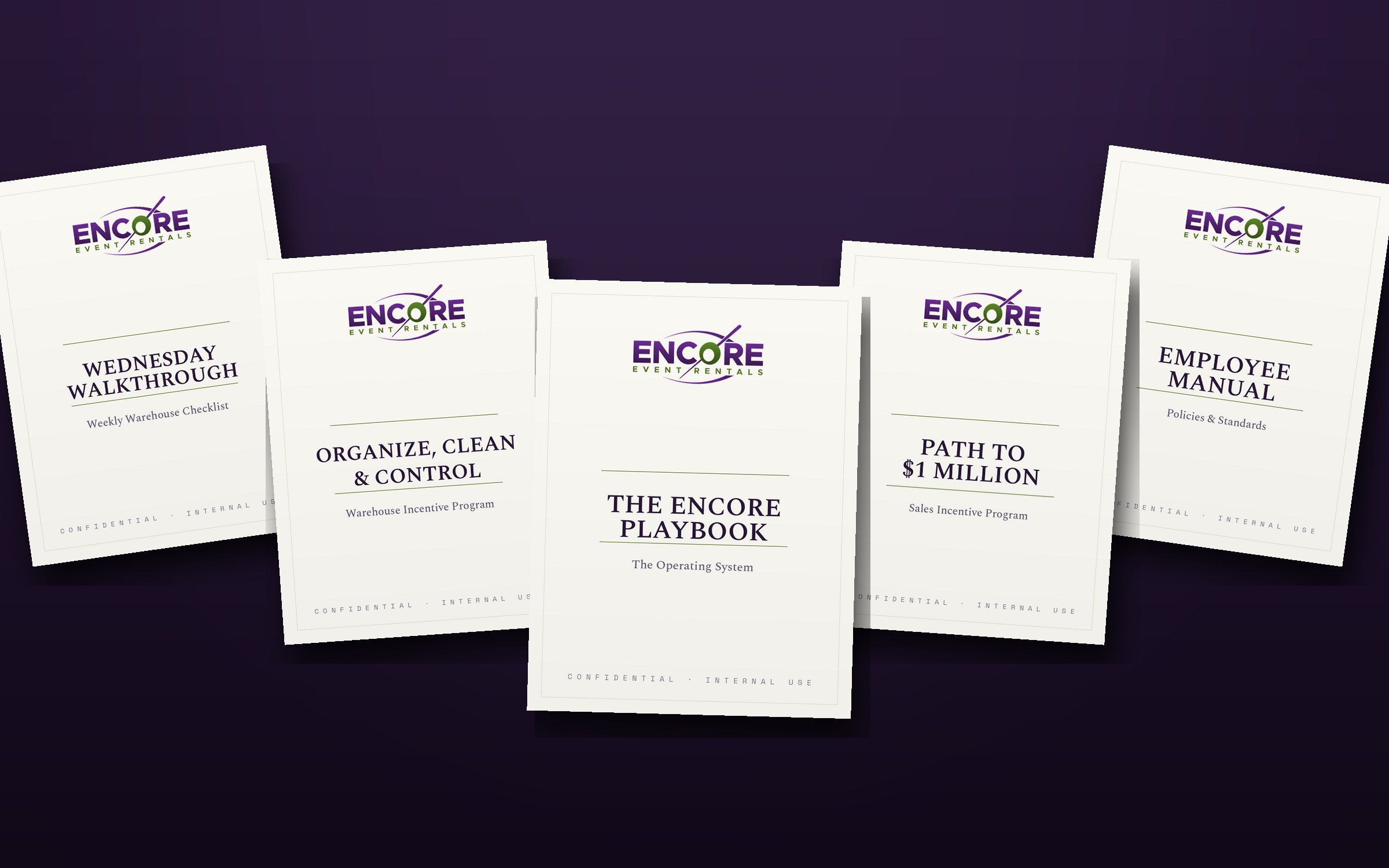
Encore's "Organize, Clean & Control" program governs the physical operation: weekly warehouse walkthroughs against posted standards, equipment cleanliness specifications down to the chair caps, and a monthly full inventory count reconciled against the rental software's out-on-contract list, with documented variance thresholds in dollars. Equipment breaks; that's the business. Equipment disappearing is a controlled, measured, incentivized number.
The Financial System
Encore measures the business the way a buyer would value it: accrual-basis revenue tracking, item-level return on asset cost, and utilization reporting that drives purchasing. Franchisees are trained not just to run the operation but to read it.
What you open with.
Day one looks like year fifteen.
A configured rental platform
Franchisees receive Encore's Point of Rental configuration already built: item catalog, pricing structure, and the reports the system runs on. You skip the years (and the cost) it took to get it right.
An itemized opening inventory
Your starting equipment package is an itemized bill of materials with named vendors, built from fifteen years of utilization data and weighted toward the assets that earn hardest, down to the chair caps and tent fittings.
Established vendor relationships
Encore's purchasing volume has earned preferred pricing with key suppliers of tents, seating, and linens: relationships franchisees plug into rather than build from scratch.
A right-sized facility
An Encore location runs from roughly 6,000 to 10,000 square feet of industrial space with a customer-facing office. No prime-rent address and no expensive buildout required, and the playbook includes a defined showroom option for operators pursuing deeper wedding-market share. Your trucks and your reputation do the marketing.
A lean opening team
Day one staffing is the owner plus two crew, with an office hire as call volume builds. This is a business an operator can fully understand and personally control.
Your first year, honestly.
We won't tell you month one looks like year fifteen. Here is the realistic arc, based on how this business actually builds.
Your launch begins with the Market Introduction Program: a structured, budgeted campaign aimed at the customers who book first and rebook forever: event planners, local businesses, churches, schools, country clubs, and municipal offices. These accounts are how an event rental company takes root in a market.
Expect roughly five to six months of building before weekend bookings become a steady rhythm. The milestone that tells you it's working comes around the end of year one: Friday deliveries are full, and you're deciding whether to add a second truck, hire more crew, or push deliveries to Thursday to fit it all in. That's the problem this model is designed to create.
A word on seasonality
Demand follows the event calendar, and how much it swings depends on your market. Spring and Fall typically run strongest, slower stretches become windows for equipment maintenance, institutional and municipal work, and sales groundwork, and big jobs have a way of landing in any month. The model flexes with the calendar through crew scheduling, and operators who have managed variable workloads in construction, equipment rental, or logistics will recognize the rhythm immediately.
Cross-rental: why a franchise beats independence in this industry.
Every independent rental company eventually faces the same moment: an order arrives for 5,000 chairs and the warehouse holds 1,000. The independent's options are bad: turn the job away, or sub-rent from a direct local competitor and hand them the relationship.
Encore franchisees have a third option: rent the inventory from another Encore location at pre-agreed network rates. The big job gets served, the margin stays in the system, and no location has to over-buy inventory ahead of demand. As the network grows, every location's effective inventory grows with it.
Built by an operator. Documented for the next one.
Fifteen years of systems, standards, and hard-won pricing discipline, written down, in daily use, and ready to transfer. If you've run crews, trucks, schedules, and budgets, you already have the hard part. Encore supplies the rest.
Review the Investment